
 FR
FR  AR
AR  EN
EN 

Historical Overview
Beni Khedache is regarded as one of the oldest areas of human settlement in southeastern Tunisia. Its early history is closely linked to mountain habitation, shaped by the geographical nature of the region. Located between the Matmata Mountains and the Jeffara plain, the city developed a lifestyle based on adaptation to a harsh climate and limited natural resources.
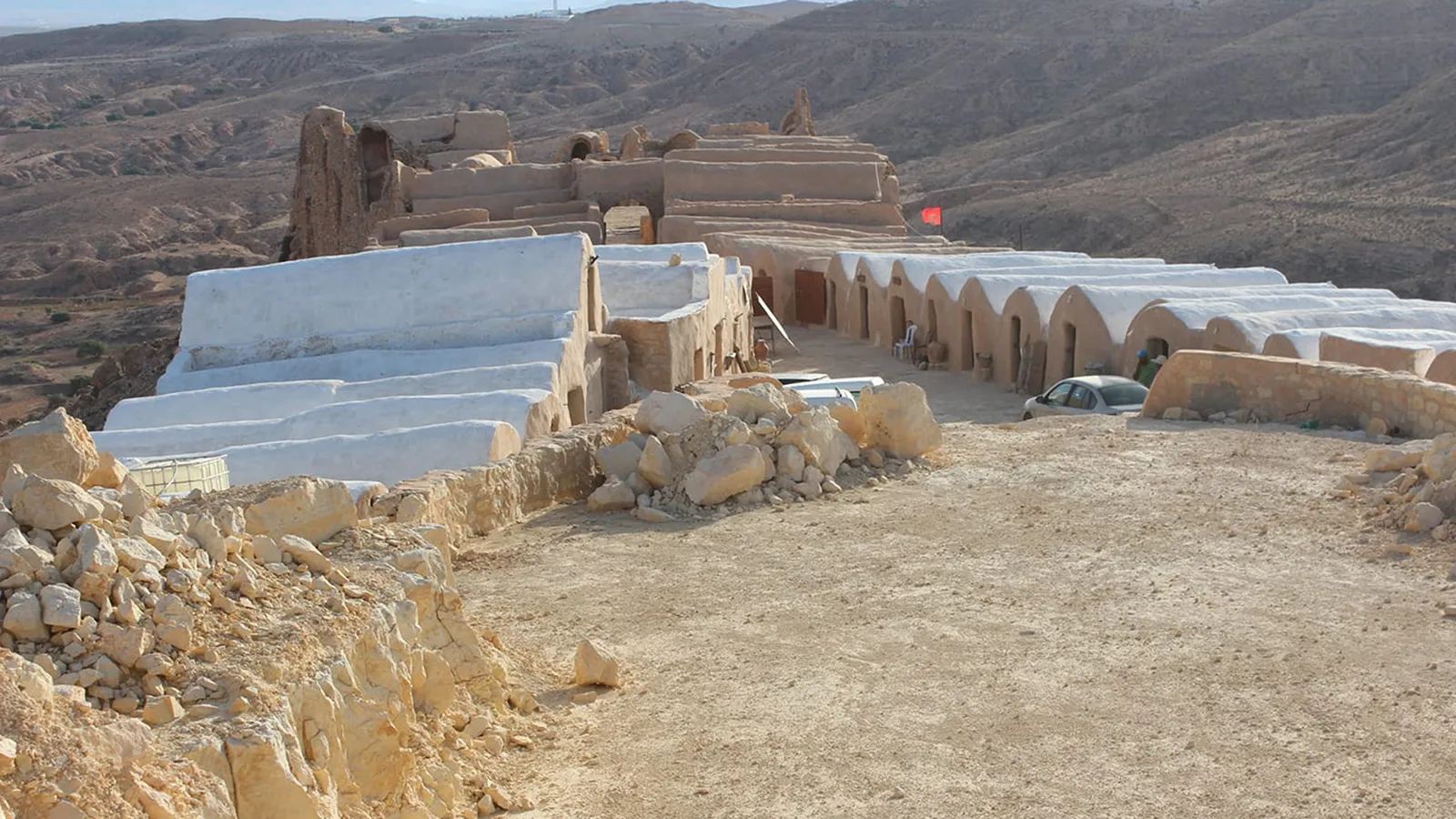
For centuries, the inhabitants of Beni Khedache relied on mountain agriculture and crop storage, which led to the construction of traditional ksour. These structures served both economic and defensive purposes, helping protect the population and secure their livelihoods during periods of instability.
Beni Khedache and the National Resistance
Beni Khedache played a significant role in the national resistance against French colonization. The city sheltered several resistance fighters, while its mountainous terrain provided a natural refuge for their movements. This role remains deeply rooted in the collective memory of the local population.
Cultural and Religious Heritage
In addition to its political and social history, Beni Khedache is known for its cultural and religious significance. The city has long been recognized for the large number of Qur’an memorizers and its religious institutions, which have contributed to preserving spiritual values and local identity across generations.
Today, Beni Khedache stands as a city that combines historical depth with authentic heritage, while maintaining its architectural and cultural character, making it a living witness to the history of southern Tunisia.